
Bone Grafting and Dental Implants
Reliable Solutions for Tooth Loss

Dental implants are the closest tooth replacement option to a natural tooth.

Bone Grafting and Dental Implants | Oral Surgeon

Bone Grafting and Dental Implants

Tooth loss is a serious problem that can make it difficult to speak clearly, chew effectively, and feel good about your appearance. Missing teeth can also lead to bone loss in the jaw, causing other teeth to shift. This increases your risk of tooth decay and periodontal disease, and it also changes your natural facial shape.

If you’re ready to restore a missing tooth, our oral surgeons can help. We can restore your tooth using a dental implant and bone grafting if necessary. This process will improve your oral health and increase your long-term quality of life. 

How Do Dental Implants Work?

When you want a permanent, natural-looking solution to missing teeth, dental implants are the best treatment available.

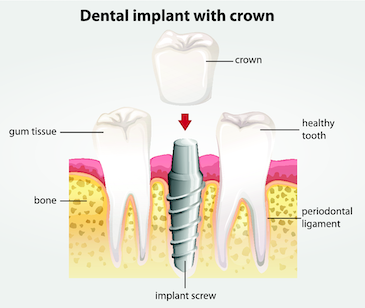
A dental implant is a biocompatible titanium post your oral surgeon places in your jawbone. As your tissue heals, it fuses to the dental implant post. This process stimulates new bone growth, which helps maintain your natural face shape and promotes good oral health.

After a few months of healing, you’ll return to our office so that we can place a dental crown on top of your titanium dental implant post. This restoration completes the tooth replacement and allows it to function normally again.

Frequently Asked Questions

Dental implants are the gold standard for teeth replacement, providing a long-term, reliable solution. However, if the bone in your jaw is degenerative or genetically thin, the dental implant may fail. An oral surgery specialist can perform bone grafting in the area so that the dental implant has a strong support.

Bone needs stimulation to grow, and if a tooth is missing, the body begins to reabsorb bone in the empty space. This process can result in facial hollowness, changes to your gum line, and even misalignment of other teeth.

Why Do I Need Bone Grafting?

For implant placement to be successful, a certain amount of bone must exist in the jaw to completely surround the dental implant. The bone gives the implant stability and strength to support the forces of chewing.

In certain situations, either due to genetics or to the gradual bone resorption that occurs when a tooth is missing, you may not have sufficient bone where your natural tooth used to be, and we would not be able to place a dental implant. However, our oral surgeons can add bone to the area in a procedure called bone grafting. After the bone graft heals, we will be able to place your dental implant. 

What Is the Bone Grafting Process?

When you meet with our oral surgery specialist about dental implant treatment, we will use imaging diagnostics to determine how much bone you have in your jaw. If you lack enough bone to support a dental implant, we will discuss a bone grafting treatment plan with you.

In the bone grafting procedure, your oral surgery specialist will add special bone grafting material to your jawbone. If the amount of bone needed is minor, we may be able to place the dental implant in the same procedure. If not, you’ll return to our oral surgery office in a few months after the area has had time to heal.

The timing of placing the dental implant after bone grafting is important to avoid bone resorption, and your oral surgeon will schedule your dental implant procedure with that in mind.

Who Is a Good Candidate for Bone Grafting?

While dental implants are fast becoming the treatment of choice for replacing missing teeth, some patients may not be good candidates for either dental implants or bone grafting. In these cases, we may recommend a dental bridge or another restorative dental treatment.

The best way to find out if you’re a good candidate for bone grafting or dental implants is to schedule an appointment with our oral surgeons for a tooth replacement evaluation. Call to schedule a dental appointment today!
  • Dr. Justin Hollar

    Dr. Justin Hollar is an experienced oral and maxillofacial surgeon committed to delivering expert surgical care to the Vancouver, Washington, community, which he has always called home. With over two decades of clinical experience, Dr. Hollar brings a patient-centered philosophy to every procedure, prioritizing safety, comfort, and informed decision-making at every step of the care journey.

    Dr. Hollar earned his Doctorate in Dental Medicine from Temple University in 2002, followed by a prestigious residency at the University of Illinois at Chicago, completed in 2007. Prior to founding Oral Surgery Solutions, he ...

    Read More

Bone Grafting and Dental Implants Technology

CBCT Cone Beam Technology

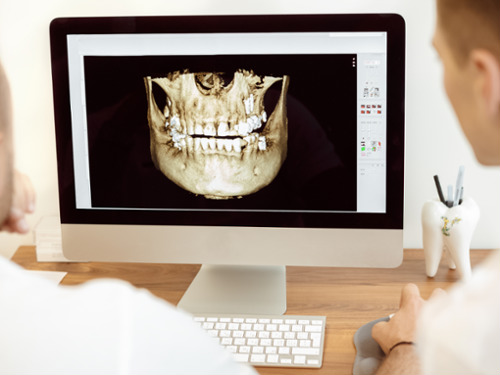
3D cone beam CT (CBCT) gives us a detailed, three-dimensional view of your teeth, jaws, nerves, and bone, so we can plan treatment with far more precision than traditional 2D x-rays. In a quick, comfortable scan, CBCT helps us evaluate bone volume for dental implants, locate infection or hidden fractures, assess impacted teeth, and map important anatomy like nerve pathways and sinuses. That detail matters: it allows for safer, more predictable care and often reduces surprises during treatment. We use CBCT as part of our digital workflow to accurately diagnose, personalize your plan, and deliver results you can feel confident about.

Testimonial

Highly recommend this practice for their professionalism and warmth!

"I had an amazing experience at Oral Surgery Solutions! The staff was so friendly and made me feel at ease right away. Assistants answered all my questions and made everything extra clear so I had no questions or worries about the surgery. Dr. Hollar was incredibly knowledgeable and careful through the whole surgery that I had. The surgery went smoothly, and I felt well cared for throughout. Highly recommend this practice for their professionalism and warmth!"
-Ang